Crossing the Atlantic and having WiFi with significant speed has never been so easy. Multiple systems throughout the years have offered a variety of connectivity options. Air-to-ground networks are built on ground towers, so the moment the coastline disappears, so does the connection. Some satcom systems work only in a dedicated region. For operators flying long-range missions and/or in a local region, the selection of a specific system was always a tradeoff.
Gogo Galileo was built as a solution to it.
JetSupport now offers installation of Gogo Galileo as part of its Modifications and Upgrades service, extending its existing partnership with Gogo Business Aviation into one of the fastest-moving satcom products on the market. JetSupport is an authorized Gogo dealer, meaning installations are handled directly under that certification rather than through a third party.
What Gogo Galileo Is
Galileo runs on the Eutelsat OneWeb low-earth-orbit constellation, not a network of ground stations, so coverage doesn’t stop at a coastline. The system connects through an electronically steered antenna, a flat panel with no moving parts, mounted to the fuselage or under the tail radome and wired into a Gogo AVANCE or Satcom Direct SDR router, which is already common across business jets.
Two antenna options cover the range of aircraft that fly today.
Two Antennas, One Network
HDX is the smaller of the two: a single electronically steered array switching rapidly between sending and receiving, built to fit any aircraft size. It delivers up to 60 Mbps down and 11 Mbps up, enough for six or more passengers to video call, stream, and work simultaneously.
FDX steps up for bigger cabins. Two dedicated arrays, one for transmission and one for reception, widen the data pipe considerably: up to 195 Mbps down and 32 Mbps up. Operators can also split that bandwidth deliberately, dedicating part of it to cabin connectivity and part to tasks like aircraft health monitoring, while the aircraft still runs on one system.
Sizing isn’t just about the antenna’s footprint. HDX weighs around 21.6 lbs and draws up to 165W; FDX runs 40 to 45 lbs and up to 330W. Larger cabins have the space and power budget for FDX. Smaller aircraft get full global coverage from HDX without carrying the extra weight.
Why Distance Decides Your Latency
Speed gets most of the attention, but latency is what actually determines whether a call or stream feels instant or sluggish. And latency comes down to a simple fact: how far the data has to travel.
Traditional GEO satellites sit roughly 36,000 kilometers (22,000 miles) from Earth. The constellation powering Gogo Galileo orbits about 1,200 kilometers (750 miles) above the planet, nearly 30 times closer. That difference is what allows real-time, high-bandwidth data transfer instead of the delay GEO systems are known for.
More than 600 satellites make up that LEO network, giving it full global coverage. Because the satellites orbit the planet rather than staying fixed in one position the way GEO satellites do, performance stays consistent everywhere the aircraft flies, including over the poles, without the signal degrading.
Built Without Moving Parts
A phased-array antenna has no motors, gimbals, or mechanical steering to wear down. That matters as much in a hangar as it does in the air: fewer moving parts means fewer things to inspect, adjust, or eventually replace, which keeps the system’s maintenance footprint smaller over the aircraft’s service life.
Does It Fit Your Aircraft?
Galileo’s STC coverage has expanded quickly. As of the most recent NBAA reporting, HDX holds STCs across more than 24 aircraft types with more in development, and FDX has followed the same path, with completed installations including a Boeing BBJ 737 and Bombardier Challenger 600-series aircraft. Combined, the certified and in-progress STC portfolio covers more than 9,000 jets in the global fleet.
That range means Galileo isn’t limited to one segment of business aviation. Light jets and long-range cabins are both covered, provided the right antenna is matched to the aircraft.
Fitting Installation Into the Maintenance Process
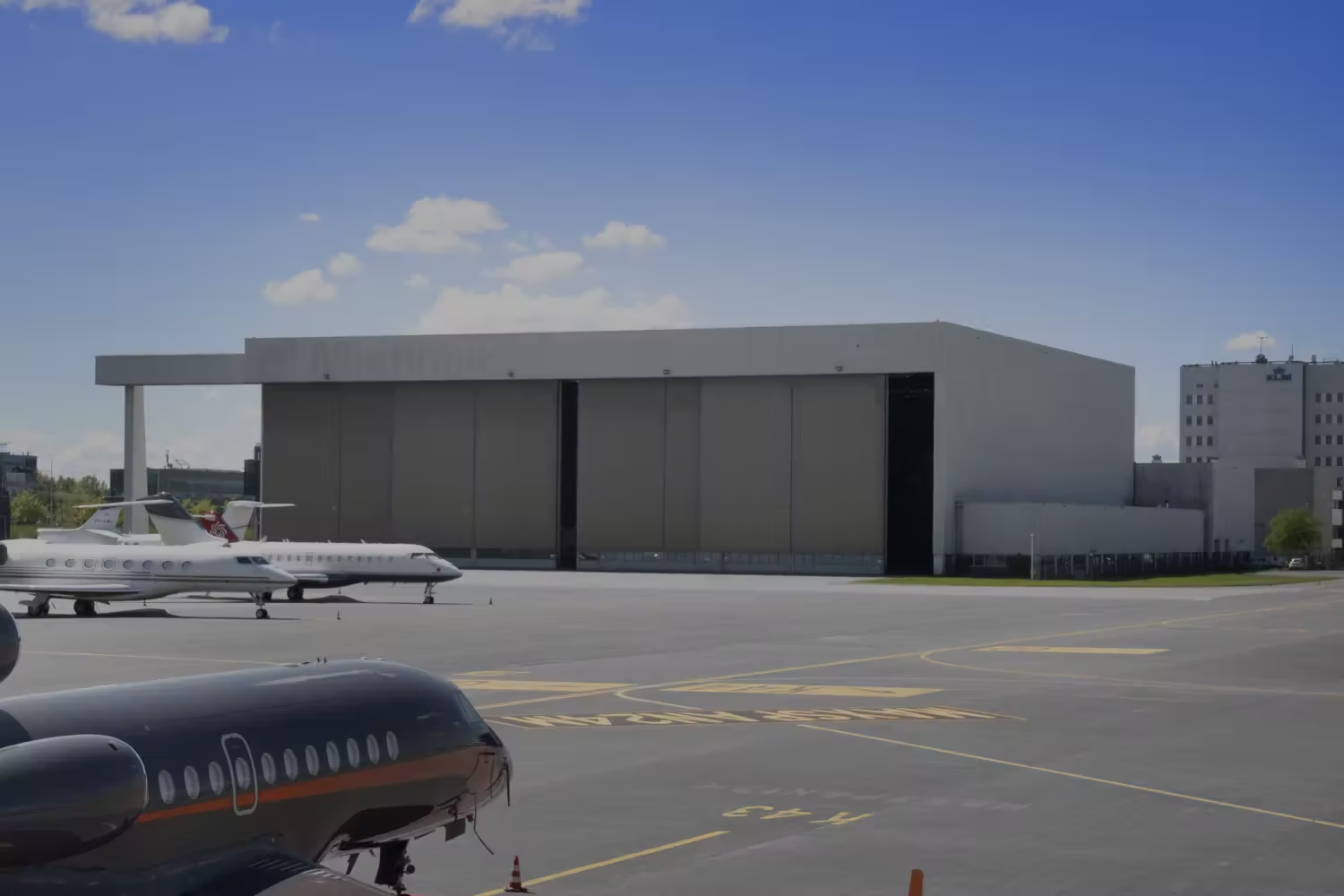
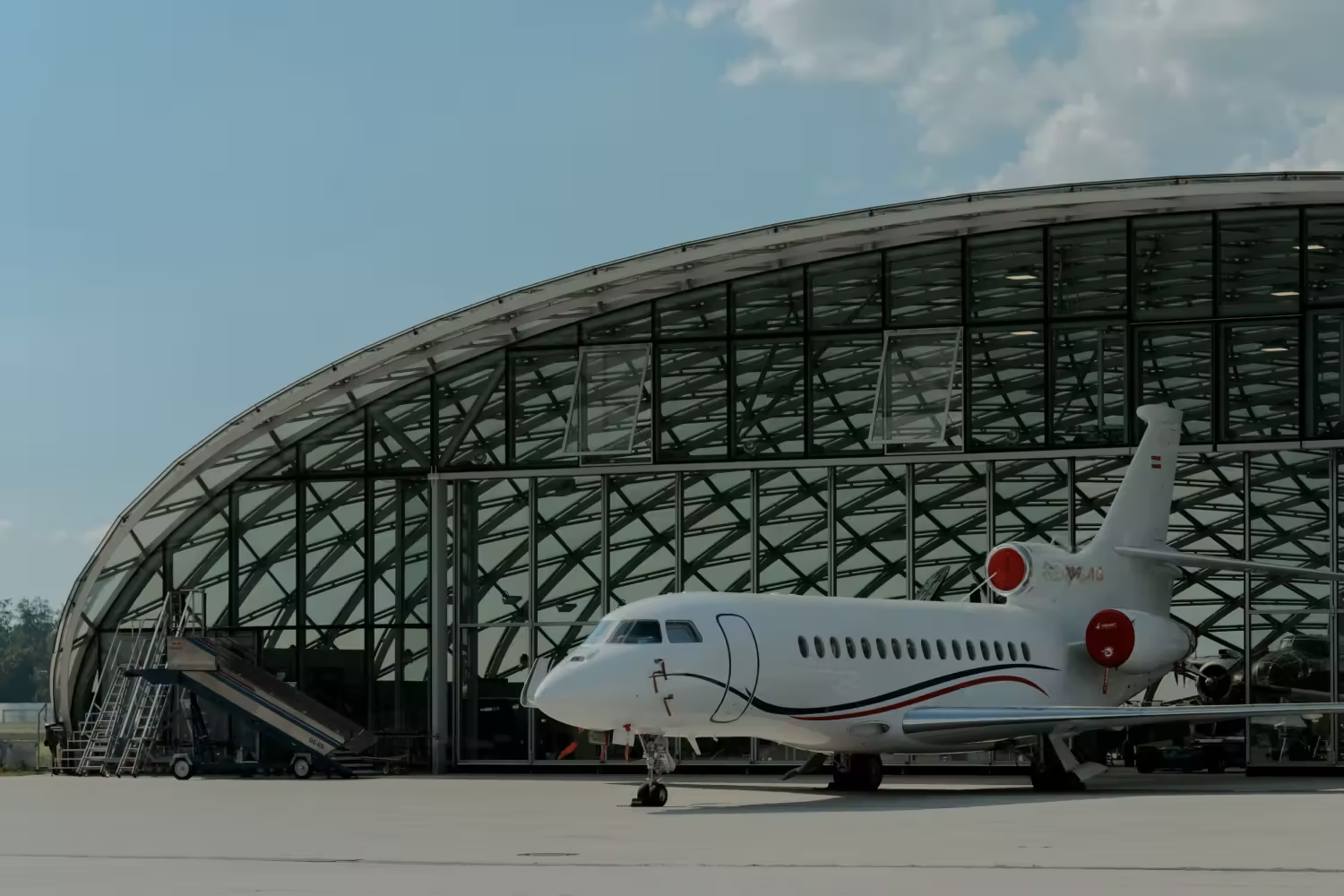
An avionics upgrade is only as good as how cleanly it fits into an aircraft’s existing schedule. JetSupport installs Gogo Galileo through its Modifications and Upgrades capability, as an authorized Gogo dealer, backed by its EASA Part-145, FAA & TCCA approved network at Amsterdam Schiphol, Munich Oberpfaffenhofen, Paris Le Bourget, and Nice Côte d’Azur.
For operators already booked in for maintenance at one of these locations, a Galileo installation can be planned into that same visit rather than requiring a separate trip. JetSupport manages the technical coordination and certification paperwork throughout, so operators know the scope and timeline before work starts. JetSupport currently has multiple aircraft in the process of installation. Reach out to us if you’d like it scheduled for your aircraft.
Connectivity That Doesn’t Ask Where You’re Flying
The value of a satcom system isn’t the antenna. It’s what stops changing when the aircraft crosses a coastline, an ocean, or a continent.
Gogo Galileo is one part of the connectivity portfolio JetSupport already supports, and now available as a certified installation across its European network.
Operators interested in Gogo Galileo installation or JetSupport’s Modifications and Upgrades service can contact the team directly at sales@jetsupport.nl.